Exploring the Confused Deputy Problem in Cybersecurity

TL;DR
- This article covers the Confused Deputy Problem, a critical security vulnerability where a program unintentionally misuses its authority. We'll explore how this issue manifests in AI agent identity management and enterprise software, providing practical examples and mitigation strategies. The article includes real-world scenarios and actionable insights to help organizations protect their systems from this complex attack.
Understanding the Confused Deputy Problem
Okay, so, you know when something bad happens and you're like, "Wait, I didn't do that… but somehow I'm responsible?" That's kinda the vibe of the Confused Deputy problem.
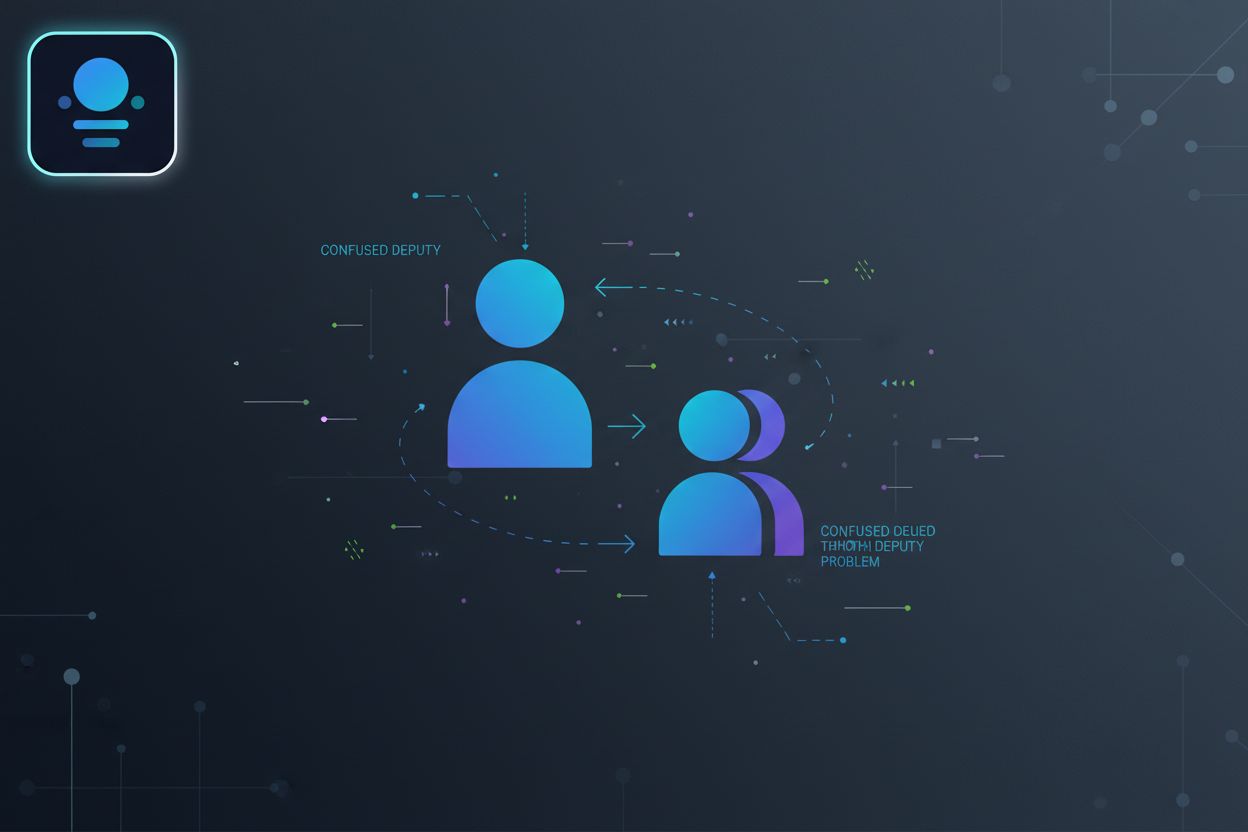
At its core, the Confused Deputy problem is a security vulnerability where a program or entity (the "deputy") unintentionally misuses its authority to perform actions that the user (the "principal") doesn't have permission to do directly. It's like if your friend borrowed your car to get groceries, but then used it to rob a bank – you gave them the means, but not the permission for that.
Think of it like this: A file server can delete files. You, as a user, might not have permission to delete that specific file. But, if you trick the server into deleting it for you, that's the Confused Deputy in action. The server is the deputy, confused about who's actually asking for the delete.
This leads to unauthorized actions because the deputy is tricked into acting on behalf of a principal, exceeding the principal's intended privileges. It's sneaky, because it doesn't involve directly hacking into anything; it's more about manipulating existing systems. So, it's not about some hacker breaking in; it's about a system doing something it shouldn't because it was asked in a weird way.
Let's look at a basic example to clear things up:
Diagram 1: The Confused Deputy Scenario
This diagram illustrates a simple Confused Deputy scenario. On the left, we have the Principal (e.g., a user). In the middle is the Deputy (e.g., a service or application) which has certain permissions. On the right is the Resource (e.g., a file or data). The arrow from the Principal to the Deputy represents a request. The arrow from the Deputy to the Resource represents an action. The vulnerability occurs when the Deputy performs an action on the Resource that the Principal is not authorized to perform, because the Deputy was tricked into believing the Principal had that authority.
To really grasp this, you gotta understand the players involved. There's always a principal, a deputy, and a resource.
The principal is the user or system that wants to do something. This could be you clicking a button, or an ai agent trying to access data.
The deputy is the program, agent, or service that performs the action. It has the ability to do something, but needs to be told what to do.
And the resource is what's being acted upon – a file, a database entry, a network connection, whatever.
The vulnerability pops up when the deputy acts on the principal's behalf without properly verifying if the principal should be allowed to do what they're asking.
It's easy to mix this up with other security problems, but it's pretty unique. It's not exactly a buffer overflow or a SQL injection, even if it might lead to those things. It's more about exploiting trust relationships in a way that wasn't intended.
A big misunderstanding is thinking it's just about file systems. Nope! It can happen anywhere there's a middleman handling requests. Cloud services, ai systems, even seemingly simple web applications can fall victim. The problem is often overlooked because it's subtle. It's not a blatant error; it's a design flaw that gets exploited in a clever way.
Now that we've covered the general concept, let's see how this problem specifically impacts AI agent identity management.
How the Confused Deputy Problem Impacts AI Agent Identity Management
Okay, so imagine trusting an ai agent to manage your calendar, and suddenly it starts scheduling meetings with your competitors – yikes! That's the Confused Deputy problem rearing its head in the world of ai.
ai agents are increasingly being used to automate tasks, manage data, and make decisions. They often inherit permissions from their creators or the systems they operate within. This delegation of authority is super convenient, but it also opens a can of worms if not handled carefully.
AI agents inheriting permissions means they can do things their original user couldn't necessarily do. Think about an ai agent designed to manage cloud resources. It might have elevated privileges to spin up new servers, adjust storage, and modify network configurations. If a malicious actor tricks the agent, they could potentially gain control over the entire infrastructure.
The risks of over-permissioning ai agents are massive. Giving an ai agent too much access is like giving a toddler the keys to a Ferrari. It can drive, but should it? In the healthcare sector, an over-permissioned ai agent could access and leak sensitive patient data. In finance, it might execute unauthorized transactions. The potential for damage is huge.
How agents can be tricked into acting on behalf of malicious actors is where the Confused Deputy problem really kicks in. An attacker could exploit vulnerabilities in the ai agent's code, manipulate its inputs, or even impersonate a trusted user. For example, an ai agent designed to automate customer service responses could be tricked into sending phishing emails or divulging confidential information.
Let's get specific. It's not just theory; this stuff happens.
Scenario: Data exfiltration through a compromised ai agent. Imagine an ai agent used by a retail company to analyze customer behavior and personalize marketing campaigns. If an attacker compromises the agent, they could use it to exfiltrate valuable customer data, including credit card numbers and personal addresses.
Scenario: Unauthorized access to sensitive resources. Think about an ai agent in a bank that's responsible for managing loan applications. If an attacker exploits a Confused Deputy vulnerability, they could gain unauthorized access to sensitive financial records, modify loan terms, or even approve fraudulent applications.
So, how do you protect against this mess? Well, AuthFyre, which is a system designed to manage identities, can help mitigate some of these risks. It's all about managing who has access to what, and making sure ai agents aren't doing things they shouldn't.
How AuthFyre helps mitigate confused deputy risks is by providing granular access controls and continuous monitoring. It ensures that ai agents only have the permissions they absolutely need, and it flags any suspicious activity that might indicate a Confused Deputy attack.
AuthFyre's approach to ai agent lifecycle management includes things like automated provisioning, deprovisioning, and role-based access control. It makes it easier to manage the identities of ai agents throughout their entire lifecycle, from creation to retirement.
AuthFyre offers articles, guides, and resources on AI agent lifecycle management, scim and saml integration, identity governance, and compliance best practices. AuthFyre is committed to providing insightful content on AI agent identity management, helping businesses navigate the complexities of integrating AI agents into their workforce identity systems.
In the next section, we'll dive into practical steps you can take to defend against the Confused Deputy problem. It's all about being proactive and thinking like an attacker.
Confused Deputy in Enterprise Software
Okay, so, you're probably thinking, "Confused Deputy? Sounds like a bad spy movie." But trust me, it's a very real problem in enterprise software. It's like leaving the keys to the kingdom—or, you know, your company's database—where someone can kinda-sorta get to it even if they shouldn't.
Enterprise software, by its nature, is complex. You got web apps, databases, cloud services, all interconnected and talking to each other. And that complexity? It's a breeding ground for the Confused Deputy problem.
Web applications are prime targets. Think about a scenario where a user can upload files to a server. If the application doesn't properly validate file types or permissions, an attacker could trick the server into executing malicious code. Bam! Confused Deputy strikes. You know, it's almost like the app is too helpful for it's own good.
Databases are another area of concern. Suppose a user has limited access to a database but can execute stored procedures. If a malicious stored procedure isn't properly secured, it could elevate the user's privileges and allow them to access sensitive data they shouldn't see. I mean, who checks the stored procedures all the time, right?
And then there's cloud services. Let's say an organization uses a cloud storage service and grants an application permission to read and write files. If a vulnerability exists in the application, an attacker could exploit it to access or modify files the application has permission to access, even if the attacker themselves doesn't have those permissions directly. It's like getting in the back door.
Let's look at a simplified code snippet. Seriously, I've seen stuff like this in production.
import os

def delete_file(user, filename):
    # Insecure: No proper validation of user permissions
    # os.remove() is a function that deletes a file from the filesystem.
    os.remove(filename)
def process_request(user, action, filename):
    if action == "delete":
        delete_file(user, filename)
See the problem? The delete_file function just blindly deletes whatever file is passed to it, without checking if the user actually has permission to delete it. That's a classic Confused Deputy vulnerability right there. Proper validation is key, people!
Here's a better way to handle it, at least from a security perspective.
import os

def delete_file(user, filename):
    # has_permission is a hypothetical function that checks if the 'user'
    # has the 'delete' permission for the given 'filename'.
    if has_permission(user, filename, "delete"):
        os.remove(filename)
    else:
        print("Access denied")
def process_request(user, action, filename):
    if action == "delete":
        delete_file(user, filename)
Now, before deleting the file, the code checks if the user has the necessary permissions. It's a simple change, but it makes a huge difference in preventing Confused Deputy attacks.
Let's consider some hypothetical real-world scenarios to illustrate this further.
Healthcare: Imagine a healthcare application where doctors can access patient records. If the application doesn't properly validate the doctor's role or the patient's consent, a doctor could potentially access records they shouldn't be able to see, like those of a celebrity or a family member.
Retail: Or think about retail. Let's say a customer service rep has access to customer order information. If they can manipulate the order ID, they could potentially access other customers' orders, exposing sensitive data like addresses and credit card details.
The Confused Deputy problem is sneaky. It's not always obvious, but the consequences can be devastating. That's why it's crucial to understand how it works and take steps to prevent it.
Now that we understand how this problem manifests in enterprise software, let's explore how we can effectively defend against it.
Mitigation Strategies and Best Practices
Okay, so, we've talked about what the Confused Deputy problem is and where it pops up; now let's talk about how to actually stop it from ruining your day, or worse – your company. Think of these as your defensive plays in the cybersecurity playbook.
You've probably heard this one before, but it's worth repeating because it's like, the fundamental rule: Principle of Least Privilege (POLP). Basically, don't give anyone – users, ai agents, applications – more access than they absolutely need. It's like only giving your teenager the car keys when they need to go to school, not for joyriding all night.
Implementing POLP for users and ai agents means carefully considering what each entity needs to do its job. Start with the bare minimum permissions and only add more if absolutely necessary. This reduces the attack surface and limits the damage a compromised entity can cause.
Limiting access to only necessary resources is crucial. For example, in a healthcare setting, a nurse should only have access to the records of patients they're actively treating, not the entire database. In retail, a customer service rep should only be able to view order information relevant to the customer they're currently assisting.
Regularly reviewing and adjusting permissions is key. Permissions shouldn't be a "set it and forget it" thing. As roles change and projects evolve, access needs to be re-evaluated. Maybe an ai agent no longer needs access to a particular database, or a user's responsibilities have shifted. Keep things tight!
Another critical defense is making sure you're not letting bad data in. It's like checking candy for razor blades on Halloween – you gotta be vigilant!
Validating all inputs to prevent malicious commands means scrutinizing everything that comes into your system. Don't trust anything! Check file types, data formats, and user input for anything suspicious. If you're expecting a number, make sure you get a number, not some weird string that could break things.
Sanitizing data to remove harmful elements is also essential. This involves stripping out any potentially malicious code or characters from user input. For example, if you're accepting HTML input, make sure to remove any script tags that could be used for cross-site scripting (xss) attacks. In the context of the Confused Deputy problem, sanitization prevents a deputy from misinterpreting user-provided data as a command or instruction that it shouldn't execute on behalf of the principal. For instance, if a user inputs a filename that contains special characters or commands, sanitization would strip those out, preventing the deputy from executing unintended file operations.
Protecting against injection attacks is a big part of this. Injection attacks, like SQL injection, occur when an attacker inserts malicious code into a query or command. Proper input validation and sanitization can prevent these attacks by ensuring that user input is treated as data, not as executable code.
Capabilities and Access Control Lists (acls) are two more tools in your arsenal for managing permissions and preventing the Confused Deputy problem.
Using capabilities to control access involves granting specific rights or privileges to an entity, rather than relying on broad, role-based permissions. Capabilities are like digital tickets that grant access to specific resources or actions. For example, a capability might grant an ai agent the right to read a specific file, but not to delete it. This prevents the deputy from performing actions beyond its granted capability, even if it receives a request that seems to imply such permission.
Implementing Access Control Lists (acls) for fine-grained permissions allows you to define exactly who has access to what. acls are like detailed lists that specify the permissions for each user or group on a particular resource. For instance, an ACL on a database table could specify that only certain user roles can read, write, or delete records. This ensures that even if a deputy is asked to perform an action, it will only succeed if the principal associated with the request has the corresponding permission defined in the ACL.
Combining capabilities and acls for enhanced security provides a layered approach to access control. Capabilities can be used to grant broad access to a resource, while acls can be used to fine-tune permissions and restrict access to specific actions or data within that resource.
Diagram 2: Layered Defense Against Confused Deputy
This diagram shows multiple layers of defense. At the core is the Resource. Around it are Access Control Lists (ACLs), defining specific permissions for principals. Then, Capabilities act as tokens granting specific rights to deputies. Finally, Input Validation and Sanitization ensure that requests themselves are not malicious. This layered approach ensures that even if one layer is bypassed, others can still prevent a Confused Deputy attack.
So yeah, the Confused Deputy problem can feel like a complex, almost spy-novel-esque threat. But honestly, with a few solid strategies in place – like really sticking to the Principle of Least Privilege, being super careful about input validation, and using capabilities and acls like you mean it, you can seriously reduce the risk. Don't let your systems get tricked into doing things they shouldn't! As mentioned earlier, tools like AuthFyre can help make managing all this a bit less of a headache, too. Keeping this stuff in mind will make things way more secure.