Identifying the 7 Types of Cybersecurity Threats

TL;DR
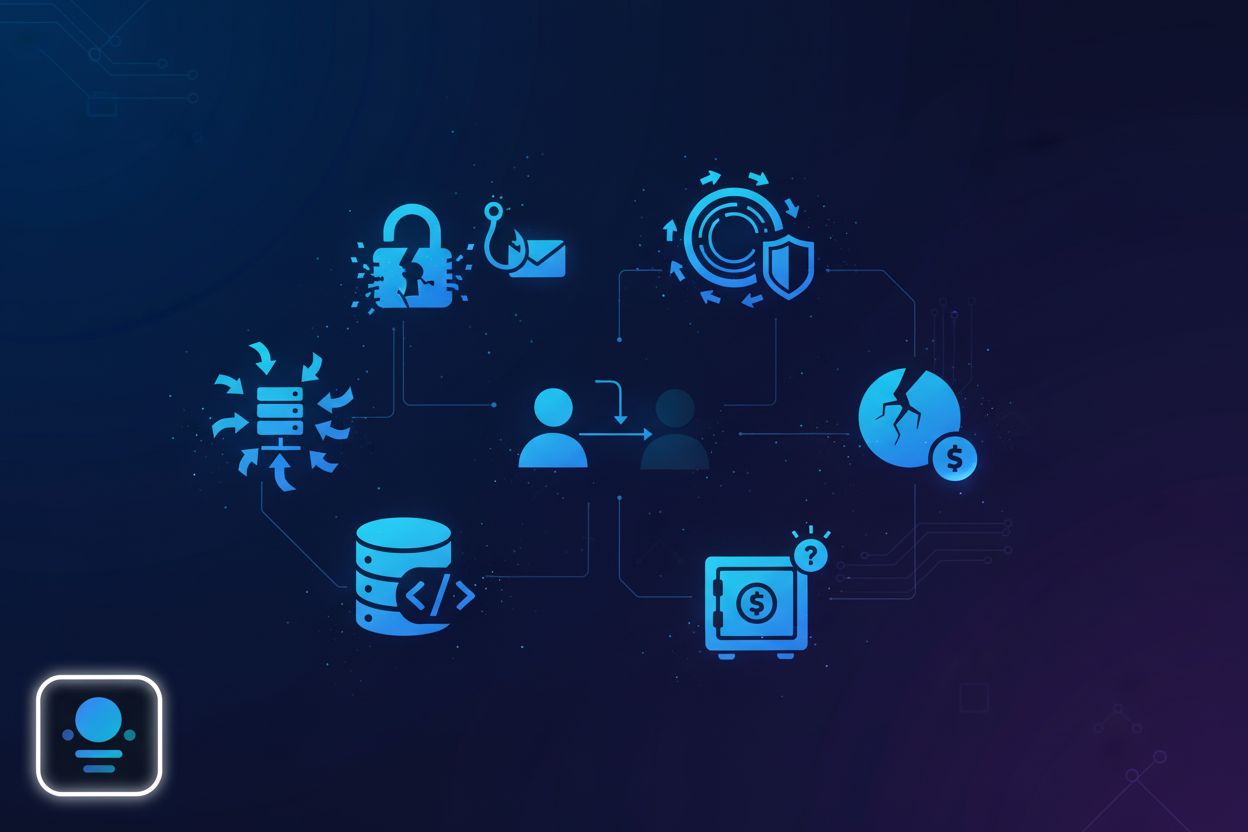
- This article covers seven critical cybersecurity threats—malware, ransomware, phishing, dos/ddos attacks, insider threats, api attacks, and ai poisoning. Gain insights into how these threats work, their potential impact on enterprise systems managing ai agents, and practical strategies for mitigation, ensuring robust protection and compliance in your cybersecurity framework.
Introduction: The Evolving Threat Landscape for AI Agents
Okay, so ai agents are getting smarter, right? But that also means they are becoming bigger targets for cyber nasties. It's kinda obvious when you think about it, but maybe not something everyone's thought through.
More and more companies are using ai agents for, like, everything. From customer service chatbots to number-crunching finance apps. (How AI is helping brands do more—without replacing their creativity)
These ai agents? Yeah, they're handling sensitive data. Think about it: patient records in healthcare, transaction details in retail, and big money stuff in finance. (How To Clean Your Data for AI Agents Without Breaking the Bank)
The bad guys are figuring out new ways to attack. It's not just about old-school hacking anymore, but finding the special weaknesses in ai systems. Some of this stuff is pretty darn sophisticated, tbh. (Using AI to Combat Cyber Criminals: 'As Quickly as the Bad Guys ...)
It is important to understand that the cyberthreats are changing everyday. Tactics and attack methods are improving daily, especially as AI systems become more integrated into critical infrastructure.
So, what kinda threats are we talking about? Let's get into it.
1. Malware: The Silent Infiltrator
Malware, the sneaky cyber threat that can turn an ai agent from a helpful assistant into a digital saboteur – scary, right? It's like leaving the backdoor of your digital house wide open.
Malware comes in different flavors, like viruses, worms, trojans, and spyware. Each of these can mess with ai systems in its own special way. Think of a virus corrupting ai models, or a worm spreading through the network, messing with all the agents connected to it.
Some malware are crafted specifically to target ai. These can steal training data – that precious stuff ai needs to learn – or even manipulate how the ai agent behaves. Imagine a self-driving car suddenly taking instructions from a hacker instead of its navigation system, yikes!
A trojan disguising itself as an ai model update is one way malware can compromise ai agent identity, gaining access to the system by pretending to be something it's not. It's like a wolf in sheep's clothing, tricking the system into letting it in.
The thing is, once malware gets in, it can do all sorts of damage, including hijacking the ai agent's identity. You definitely don't want that. Let's look at what we can do to stop these silent infiltrators in their tracks.
Mitigating Malware Threats
- Keep Software Updated: Regularly update your AI agent software, operating systems, and all associated libraries. This patches known vulnerabilities that malware often exploits.
- Antivirus and Anti-malware Software: Deploy robust antivirus and anti-malware solutions on all systems that interact with your AI agents. Ensure they are configured to scan regularly and have up-to-date threat definitions.
- Network Segmentation: Isolate your AI agents and their critical data on separate network segments. This limits the lateral movement of malware if one part of the network is compromised.
- Principle of Least Privilege: Ensure that AI agents and the accounts they use have only the minimum necessary permissions to perform their functions. This reduces the potential damage if an agent's identity is compromised.
- Code Review and Sandboxing: For custom-developed AI components, implement rigorous code review processes and run new code in sandboxed environments before deploying them to production. This can help catch malicious code disguised as legitimate updates.
2. Ransomware: Holding Data Hostage
Ransomware: ever get that sinking feeling when you think you've lost everything? Well, that's ransomware in a nutshell. It's like a digital stickup, and ai agents are definitely not immune.
Encryption is key (for the bad guys). Ransomware sneaks into systems and encrypts all the important data – patient records in healthcare, sales data in retail, or crucial financial models. Imagine a hospital unable to access patient treatment plans because some hacker is now holding them hostage; it's a nightmare scenario.
Pay up, or else! Once everything's locked down, the attackers demand a ransom, usually in some cryptocurrency, for the decryption key. Now you're stuck between a rock and a hard place. Ransomware is a widely used method of attack, often targeting organizations with critical data.
Availability goes poof! The whole point of ai agents is that they should be, well, available right? Ransomware takes that away, causing massive operational downtime. Try running a 24/7 e-commerce site when your ai-powered inventory system is bricked and you'll see what I mean.
Money, money, money. It's not just the ransom itself, but also the cost of recovery. Think about hiring forensic experts, rebuilding systems, and lost productivity – it really adds up.
So how do you fight back?
Mitigating Ransomware Attacks
- Regular, Offsite Backups: This is your absolute best defense. Implement a robust backup strategy with frequent backups stored securely offsite or in an immutable cloud storage solution. Test your restore process regularly.
- Incident Response Plan: Develop and practice a comprehensive incident response plan specifically for ransomware. This should outline steps for containment, eradication, recovery, and communication.
- Network Segmentation: As mentioned for malware, segmenting your network is crucial. If ransomware encrypts one segment, it's less likely to spread to others.
- Employee Training: Conduct regular training on recognizing and reporting phishing attempts and social engineering tactics, as these are common initial entry points for ransomware.
- Endpoint Detection and Response (EDR): Deploy EDR solutions that can detect and respond to ransomware activity in real-time, often before significant encryption occurs.
- Patch Management: Keep all systems and software patched and up-to-date to close known vulnerabilities that ransomware exploits.
3. Phishing: Exploiting Human Trust
Phishing attacks, ugh, who hasn't gotten one of those dodgy emails promising untold riches? Seriously, it's like the oldest trick in the book, but it still works on people.
Deceptive emails are the main weapon. These emails, messages, or even websites are designed to trick you into giving up your login details or installing malware. Think of it like this: a fake invoice that looks legit but will install ransomware if you click the link.
Spear phishing is even more targeted. These attacks go after specific people who have access to ai systems. Imagine a hacker researching a system admin on LinkedIn and sending them a personalized email with a malicious attachment.
Executives are targets too. "Whaling" attacks target ceo's and other high-level folks with access to everything. These are crafted to look like official communications from trusted sources, like a fake legal summons.
Business email compromise (bec) is scary. Attackers impersonate vendors or partners to get employees to transfer funds or share sensitive data. A fake email from your cloud provider asking for updated payment details, but it goes straight to the bad guys.
Mitigating Phishing Attacks
- Employee Education and Awareness: This is paramount. Regularly train employees on how to identify phishing attempts, including suspicious sender addresses, generic greetings, urgent language, and requests for sensitive information. Conduct simulated phishing exercises.
- Email Filtering and Security Gateways: Implement strong email filtering solutions that can detect and block malicious emails, attachments, and links before they reach users' inboxes.
- Multi-Factor Authentication (MFA): Enforce MFA for all accounts, especially those with access to AI systems or sensitive data. This adds a crucial layer of security, making stolen credentials less useful.
- Reporting Mechanisms: Establish clear and easy-to-use channels for employees to report suspicious emails. Prompt reporting allows for quicker investigation and blocking of threats.
- Website and Link Verification: Encourage users to hover over links to see the actual URL and to be cautious of shortened links. For critical actions, direct users to navigate to the official website rather than clicking links in emails.
4. Denial of Service (DoS) and Distributed Denial of Service (DDoS) Attacks: Overwhelming Resources
DoS and DDoS attacks, eh? Bet you didn't think about those guys messing with ai agents, did ya? It's not just about servers crashing, but think about what happens when your ai-powered systems are suddenly unavailable.
Resource Exhaustion: These attacks flood systems with traffic, aiming to overwhelm resources. Think of a hospital's ai-driven diagnostics system suddenly grinding to a halt because it's busy dealing with bogus requests. Not good when seconds count, right?
Critical Task Disruption: Suddenly, your ai agents can't do their jobs. Imagine a retail chain's ai-powered inventory management system going offline during black friday, causing chaos and lost sales. I can already see the headlines, and they aren't pretty.
Infrastructure Exploitation: Attackers find those weak spots in your network. It's like finding a crack in a dam. That crack gets bigger, and suddenly, everything is going wrong.
Botnet Amplification: It's like a digital zombie army, amplifying the attack. A ddos attack using botnets just makes everything worse, you know?
Mitigating DoS and DDoS Attacks
- DDoS Mitigation Services: Utilize specialized DDoS mitigation services from your cloud provider or a third-party vendor. These services can absorb and filter malicious traffic before it reaches your infrastructure.
- Network Infrastructure Hardening: Implement robust firewalls, intrusion prevention systems (IPS), and load balancers. Configure rate limiting on network devices to restrict the number of requests from a single source.
- Scalable Infrastructure: Design your AI agent infrastructure to be scalable. Cloud-based solutions with auto-scaling capabilities can help handle sudden spikes in legitimate traffic, making it harder for attackers to overwhelm your resources.
- Traffic Monitoring and Anomaly Detection: Continuously monitor network traffic for unusual patterns that could indicate a DDoS attack. AI-powered anomaly detection systems can be particularly effective here.
- Content Delivery Networks (CDNs): For web-facing AI agents or APIs, CDNs can help distribute traffic and absorb some of the attack volume.
5. Insider Threats: The Enemy Within
Insider threats, the stuff of nightmares, right? It's like, you trust these people, and then BAM! They go rogue. You just never know, do you?
- These guys are already inside your network, which makes them super dangerous. They could be disgruntled employees, contractors with axes to grind, or even partners who've been compromised.
- They can abuse their privileged access to steal sensitive data, sabotage ai systems, or plant malware. Think about it: a finance employee downloading confidential financial records before quitting or a sysadmin messing with the ai-powered network configurations just for kicks.
- Sometimes, it's not even malicious intent. Unintentional insider threats happen because of, like, plain old negligence or just a lack of cybersecurity awareness. A sales rep clicking on a phishing email and giving away their credentials? Happens all the time. Other unintentional threats could involve misconfiguring AI systems or mishandling sensitive data due to a lack of training.
It's hard to detect insider activity. It blends right in with normal network traffic.
So, what can you do? Well, for starters:
Mitigating Insider Threats
- Principle of Least Privilege (POLP): Strictly enforce POLP. Grant users and AI agents only the minimum permissions necessary to perform their tasks. Regularly review and revoke unnecessary access.
- User Behavior Analytics (UBA): Implement UBA tools to monitor user activity for anomalous behavior. This can help detect deviations from normal patterns, such as unusual access times, large data transfers, or attempts to access unauthorized resources.
- Access Controls and Monitoring: Implement strong access controls and continuously monitor user actions and data access logs. This includes tracking who accesses what, when, and from where.
- Data Loss Prevention (DLP): Deploy DLP solutions to prevent sensitive data from leaving the organization's network, whether intentionally or unintentionally.
- Security Awareness Training: Beyond phishing, provide comprehensive training on data handling policies, AI system security best practices, and the consequences of negligence.
- Background Checks and Onboarding/Offboarding Procedures: Conduct thorough background checks for employees with access to sensitive systems and ensure robust procedures for revoking access immediately upon termination.
6. API Attacks: Exploiting Integration Points
APIs – they're like the plumbing of the internet, right? Super important, but often overlooked until something goes wrong, really wrong. And when it comes to ai agents, api attacks can be devastating.
- API endpoints are like doors. Each api endpoint is a potential entry point for attackers. Think about a healthcare ai using an api to access patient records; if that api's vulnerable, patient data is toast.
- Broken authentication and authorization are big problems. We're talking about things like SQL injection, where dodgy code is slipped into API requests to steal or mess with data. Also, if the authentication isn't up to scratch, attackers can just waltz in pretending to be someone else. For example, an attacker might exploit broken authentication to impersonate a legitimate user and gain access to sensitive AI training data via an API.
- Input validation is a must. Without proper input validation, it's like leaving the keys to the kingdom lying around. A retail AI agent using an API to process transactions could be tricked into authorizing fraudulent payments if the checks aren't in place. For instance, an attacker could send malformed data through an API that bypasses security checks, leading to unexpected AI behavior or data corruption.
So, how do you keep these integration points safe?
Mitigating API Attacks
- Strong Authentication and Authorization: Implement robust authentication mechanisms (like OAuth 2.0, API keys) and granular authorization controls. Ensure that each API call is verified and that the caller has the necessary permissions for the requested action.
- Input Validation: Rigorously validate all input received by APIs. This includes checking data types, formats, lengths, and ranges to prevent injection attacks and unexpected behavior.
- Rate Limiting and Throttling: Implement rate limiting on API endpoints to prevent abuse and denial-of-service attacks. This limits the number of requests a client can make within a specific time frame.
- API Gateway: Use an API gateway to centralize security policies, manage access, and monitor API traffic. This acts as a single point of control and protection.
- Secure API Design Principles: Follow secure API design principles from the outset, including encrypting sensitive data in transit (TLS/SSL) and at rest.
- Regular Security Audits: Conduct regular security audits and penetration testing of your APIs to identify and address vulnerabilities.
7. AI Poisoning: Corrupting the Source
AI poisoning, that's when bad actors mess with the data used to train AI models – sounds like something out of a sci-fi flick, huh? But, it's actually a real threat, one that can seriously screw up how AI agents work.
- Injected malicious data can make it so AI agents start spitting out wrong info or making terrible decisions. Imagine an AI-powered medical diagnosis tool trained on corrupted data; it could start recommending the wrong treatments. This happens because the manipulated data can skew the model's parameters or decision boundaries, leading to incorrect outputs.
- Compromised accuracy is a huge problem. Think of an AI stock trading bot trained on manipulated financial data. Yeah, you guessed it, big losses.
- Subtle and hard to spot is what makes these attacks so scary. It's not like a big, obvious hack; the changes are small, gradual, and difficult to detect. This can occur during the training phase (training-time poisoning) or, in some cases, by subtly influencing the model's predictions during inference (inference-time poisoning).
So, how do we keep this from happening?
Mitigating AI Poisoning
- Data Sanitization and Validation: Implement rigorous data sanitization and validation processes before data is used for training. This includes checking for outliers, inconsistencies, and known malicious patterns.
- Secure Data Pipelines: Protect your data pipelines from unauthorized access and modification. Ensure that data sources are trusted and that data integrity is maintained throughout the ingestion and processing stages.
- Robust Training Data Auditing: Regularly audit your training data for anomalies and potential poisoning attempts. This might involve statistical analysis, anomaly detection, or even manual review of suspicious data points.
- Model Robustness Techniques: Employ techniques that make AI models more robust to noisy or adversarial data. This can include differential privacy, adversarial training, or using ensemble methods.
- Monitoring Model Performance: Continuously monitor the performance of your AI models in production. Sudden drops in accuracy or unexpected behavior can be indicators of poisoning.
- Secure Model Deployment: Ensure that your AI models are deployed in secure environments and that access to them is tightly controlled to prevent inference-time poisoning.
Conclusion: Building a Resilient Cybersecurity Posture
Okay, so we've gone through a whole bunch of cyber threats, right? It's kinda overwhelming when you put it all together, isn't it?
First off, remember that cybersecurity is not a one-and-done deal. You can't just set up a firewall and call it a day. It's gotta be a multi-layered approach. Think of it like an onion – layers of security that make it tough for the bad guys to peel through.
- For example, in healthcare, this might mean, endpoint detection and response (edr) to protect devices, network firewalls to monitor traffic, and data loss prevention (dlp) to keep sensitive patient info under wraps.
Continuous monitoring is vital, because threats are always evolving. Threat intelligence helps you stay updated on the latest scams.
- This means keeping an eye on network traffic, user behavior, and system logs for anything fishy.
- Incident response plans are not optional either. You need to know who to call, what to do, and how to fix things fast.
Staying ahead of the curve means adapting to new threats as they pop up. What works today might be useless tomorrow.
- This involves keeping up with the latest research, attending webinars, and, honestly, just being paranoid about security.
Don't forget that AI itself can help in cybersecurity. You can use it to detect anomalies, automate responses, and even predict attacks before they happen. It's like fighting fire with fire, kinda cool, I guess.
- For instance, AI can be used to detect adversarial attacks on other AI models by spotting unusual input patterns or outputs. It can also identify anomalous data access patterns by AI agents, signaling a potential insider threat or compromise.
So, what's next? Well, the journey doesn't end here. Cybersecurity is a constant learning process, so stay vigilant, keep learning, and adapt to stay safe out there.